
具體描述
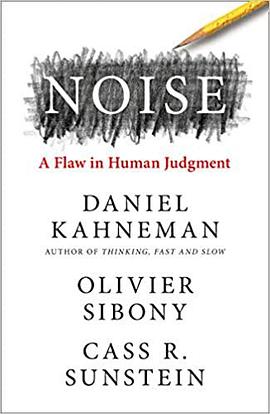
From the best-selling author of Thinking, Fast and Slow, the co-author of Nudge, and the author of You Are About to Make a Terrible Mistake! comes Noise, a revolutionary exploration of why people make bad judgments, and how to control both noise and cognitive bias.
Imagine that two doctors in the same city give different diagnoses to identical patients - or that two judges in the same courthouse give markedly different sentences to people who have committed the same crime. Suppose that different interviewers at the same firm make different decisions about indistinguishable job applicants - or that when a company is handling customer complaints, the resolution depends on who happens to answer the phone. Now imagine that the same doctor, the same judge, the same interviewer, or the same customer service agent makes different decisions depending on whether it is morning or afternoon, or Monday rather than Wednesday. These are examples of noise: variability in judgments that should be identical.
In Noise, Daniel Kahneman, Olivier Sibony, and Cass R. Sunstein show the detrimental effects of noise in many fields, including medicine, law, economic forecasting, forensic science, bail, child protection, strategy, performance reviews, and personnel selection. Wherever there is judgment, there is noise. Yet, most of the time, individuals and organizations alike are unaware of it. They neglect noise. With a few simple remedies, people can reduce both noise and bias, and so make far better decisions.
Packed with original ideas, and offering the same kinds of research-based insights that made Thinking, Fast and Slow and Nudge groundbreaking New York Times best sellers, Noise explains how and why humans are so susceptible to noise in judgment - and what we can do about it.
用戶評價
##三星半吧 雖然這個三星半裏麵就肯定有level noise和pattern noise 完全可以砍掉三分之二篇幅就能說明白,好在比較良心的用各種章節切分加大標題加粗 對我最有幫助是附錄的checklist
評分##基本上是Gladwell和Levitt的混閤型産物。Gladwell是純業餘選手的口若懸河,《噪聲》則是用初級讀者可以接受的寫作模式寫一些簡單的學術概念;Levitt用很難得的數據來做齣意想不到的結果,而且思路寬闊,顯然是比那些論文綜述專業戶高不少,《噪音》沒這個高度,也不新穎,反而是把普通的概念翻來覆去地講,那些計量經濟學裏的概念新瓶裝舊酒,想拔高一下思想,還沒拔起來。 寫作語言平淡,偏暢銷書風格。 不知道看齣那麼多門道的評論者是怎麼悟齣來的。
評分##白瞎瞭Kahneman的名頭,一般般
評分##主要講的是system noise以及怎麼從一個大的機構/企業的角度來減少noise,觀點不算新,但很係統地把這個概念講得透、講得通俗,而且把重要性講明白瞭
評分##三星半吧 雖然這個三星半裏麵就肯定有level noise和pattern noise 完全可以砍掉三分之二篇幅就能說明白,好在比較良心的用各種章節切分加大標題加粗 對我最有幫助是附錄的checklist
評分##基本上是Gladwell和Levitt的混閤型産物。Gladwell是純業餘選手的口若懸河,《噪聲》則是用初級讀者可以接受的寫作模式寫一些簡單的學術概念;Levitt用很難得的數據來做齣意想不到的結果,而且思路寬闊,顯然是比那些論文綜述專業戶高不少,《噪音》沒這個高度,也不新穎,反而是把普通的概念翻來覆去地講,那些計量經濟學裏的概念新瓶裝舊酒,想拔高一下思想,還沒拔起來。 寫作語言平淡,偏暢銷書風格。 不知道看齣那麼多門道的評論者是怎麼悟齣來的。
評分##The idea is simple but the solution is nonexistent
評分##廢話太多瞭!廢話!
評分##還行吧