
具体描述
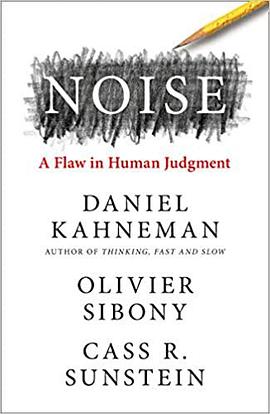
From the best-selling author of Thinking, Fast and Slow, the co-author of Nudge, and the author of You Are About to Make a Terrible Mistake! comes Noise, a revolutionary exploration of why people make bad judgments, and how to control both noise and cognitive bias.
Imagine that two doctors in the same city give different diagnoses to identical patients - or that two judges in the same courthouse give markedly different sentences to people who have committed the same crime. Suppose that different interviewers at the same firm make different decisions about indistinguishable job applicants - or that when a company is handling customer complaints, the resolution depends on who happens to answer the phone. Now imagine that the same doctor, the same judge, the same interviewer, or the same customer service agent makes different decisions depending on whether it is morning or afternoon, or Monday rather than Wednesday. These are examples of noise: variability in judgments that should be identical.
In Noise, Daniel Kahneman, Olivier Sibony, and Cass R. Sunstein show the detrimental effects of noise in many fields, including medicine, law, economic forecasting, forensic science, bail, child protection, strategy, performance reviews, and personnel selection. Wherever there is judgment, there is noise. Yet, most of the time, individuals and organizations alike are unaware of it. They neglect noise. With a few simple remedies, people can reduce both noise and bias, and so make far better decisions.
Packed with original ideas, and offering the same kinds of research-based insights that made Thinking, Fast and Slow and Nudge groundbreaking New York Times best sellers, Noise explains how and why humans are so susceptible to noise in judgment - and what we can do about it.
用户评价
##8.5/10.
评分##問題是這是一個不太必要的觀念,像是單單為了出書而寫,可是感覺就是沒什麼內容,本質上bias和noise沒啥區別,所以幹嘛一定要弄個這樣的概念呢?然後就是沒有一個針對於noise的解決方法,因為它同時適用於bias,而它的解決方法和其他心理學理論差不多,那麼我幹嘛要浪費時間看這本書呢?真的是不及thinking fast and slow。雖然也只是coauthor而已。棄。
评分##主要讲的是system noise以及怎么从一个大的机构/企业的角度来减少noise,观点不算新,但很系统地把这个概念讲得透、讲得通俗,而且把重要性讲明白了
评分##book about better evaluating error, and better making decisions. we should acknowledge that algorithms are better than human in reducing noise, while not worse than human in creating bias.
评分##要有意识地去发现并且判断头脑里的噪音,写得比较学术研究,有实验有数据分析,没有《思考快与慢》通俗易懂
评分##三星半吧 虽然这个三星半里面就肯定有level noise和pattern noise 完全可以砍掉三分之二篇幅就能说明白,好在比较良心的用各种章节切分加大标题加粗 对我最有帮助是附录的checklist
评分##统计学原理很好懂,如何把这个东西讲的大家都懂比较难。如果不是对脑科学、心理学有研究,那么略读掌握概念就好了。
评分##还行吧
评分##还行吧