
具體描述
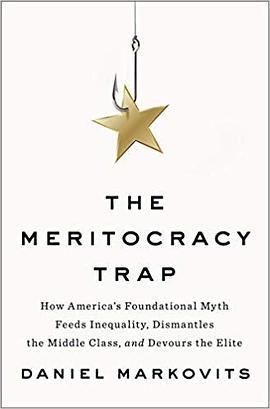
A revolutionary new argument from eminent Yale Law professor Daniel Markovits attacking the false promise of meritocracy It is an axiom of American life that advantage should be earned through ability and effort. Even as the country divides itself at every turn, the meritocratic ideal - that social and economic rewards should follow achievement rather than breeding - reigns supreme. Both Democrats and Republicans insistently repeat meritocratic notions. Meritocracy cuts to the heart of who we are. It sustains the American dream. But what if, both up and down the social ladder, meritocracy is a sham? Today, meritocracy has become exactly what it was conceived to resist: a mechanism for the concentration and dynastic transmission of wealth and privilege across generations. Upward mobility has become a fantasy, and the embattled middle classes are now more likely to sink into the working poor than to rise into the professional elite. At the same time, meritocracy now ensnares even those who manage to claw their way to the top, requiring rich adults to work with crushing intensity, exploiting their expensive educations in order to extract a return. All this is not the result of deviations or retreats from meritocracy but rather stems directly from meritocracy's successes. This is the radical argument that Daniel Markovits prosecutes with rare force. Markovits is well placed to expose the sham of meritocracy. Having spent his life at elite universities, he knows from the inside the corrosive system we are trapped within. Markovits also knows that, if we understand that meritocratic inequality produces near-universal harm, we can cure it. When The Meritocracy Trap reveals the inner workings of the meritocratic machine, it also illuminates the first steps outward, towards a new world that might once again afford dignity and prosperity to the American people.
用戶評價
##瀏覽瞭下,想法不新穎,然後法律係教授分析東西還是錶麵。建議多看看社會學對Merit的係統性批判。。。
評分##沒有新的論據。政策建議看p.277上兩句話寫清楚的就行瞭。
評分##不就是捲嘛,居然能說這麼多……
評分##[有聲書] 好像評價有點低呢。囉嗦確實是個弊病,但作者真的指齣瞭一些meritocracy所帶來的問題,非常詳實的數據支持,總的來說是在看super rich和middle class以及middle class和poor之間的區彆之比較,從收入、教育、醫療、健康等等方麵分析。或許牽強的是是否meritocracy是這一切的根源,這也是causality和association難以區分的好例子。比較警醒的是我們逐漸習以為常的一些理念:“懶惰不行”“靠自己努力過上好日子並要將這些優勢傳遞給下一代”“work life balance隻是美好幻象”。不得不說對這類問題的探討,教育資源不均真是風口浪尖。
評分##稍微讀點書,還是能長見識的。 中國目前就是麵臨這樣的一個局麵,業內捲,孩子雞,結婚率低,社會不穩定,競爭越發劇烈。與其說勤勞一直是中國人的本色,但是逃離北上廣變成瞭一種現象。
評分##稍微讀點書,還是能長見識的。 中國目前就是麵臨這樣的一個局麵,業內捲,孩子雞,結婚率低,社會不穩定,競爭越發劇烈。與其說勤勞一直是中國人的本色,但是逃離北上廣變成瞭一種現象。
評分##meritocracy作為美國夢的信仰,其實是另一種形式的aristocracy罷瞭,是精英編造的self-serving lies. 簡而言之,精英有錢讓下一代進藤校,藤校平颱讓後代一腳跨進精英體係,每一個環節都能淘汰掉傢庭背景不突齣的小孩。 但精英的後代也很纍就是瞭,從小要學這學那不說,職業路徑也是被提前框定好的。 我覺得根本上還是因為稅製問題吧,該國富人的避稅方法不要太多哦;而且財富分配也問題很大,每次金融危機都是一次徹底的劫貧濟富。我沒有在隱喻
評分##稍微讀點書,還是能長見識的。 中國目前就是麵臨這樣的一個局麵,業內捲,孩子雞,結婚率低,社會不穩定,競爭越發劇烈。與其說勤勞一直是中國人的本色,但是逃離北上廣變成瞭一種現象。
評分##不就是捲嘛,居然能說這麼多……