
具体描述
In his earlier bestsellers Guns, Germs and Steel and Collapse, Jared Diamond transformed our understanding of what makes civilizations rise and fall. Now, in the final book in this monumental trilogy, he reveals how successful nations recover from crisis through selective change — a coping mechanism more commonly associated with personal trauma.
In a dazzling comparative study, Diamond shows us how seven countries have survived defining upheavals in the recent past — from US Commodore Perry’s arrival in Japan to the Soviet invasion of Finland to Pinochet’s regime in Chile — through a process of painful self-appraisal and adaptation, and he identifies patterns in the way that these distinct nations recovered from calamity. Looking ahead to the future, he investigates whether the United States, and the world, are squandering their natural advantages, on a path towards political conflict and decline. Or can we still learn from the lessons of the past?
Adding a psychological dimension to the awe-inspiring grasp of history, geography, economics, and anthropology that marks all Diamond’s work, Upheaval reveals how both nations and individuals can become more resilient. The result is a book that is epic, urgent, and groundbreaking.
用户评价
##One strong feeling is that having the form of countries as today, it seems inherent to have a world full of conflicts; ps, wish we can also have a similar self-reflection...pps, would't it be the case that emphasizing national identity may lead to nationalism?
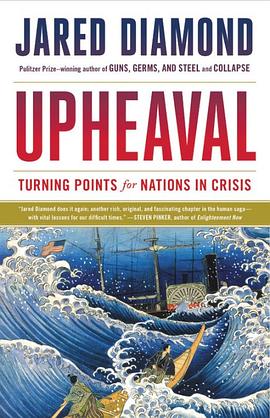
评分##Interesting angles and analogies in reviewing the 7 selected countries, although no dedicated chapter to China (as it’s not one of the seven) it’s inevitably everywhere... Pleased and relieved with his unbiased attitude condemning Japan’s irresponsibility of denying its crimes in WWII. BTW another book using The Great Wave off Kanagawa🌊 as cover.
评分##类比个人对危机应对,以此为框架看国家的危机应对,听起来有点民科但却也确实带来不少洞见。分析的例子中,有国内大家较为熟悉的如日本明治维新、德国二战后重建与两德统一,也有至少我个人不熟悉的如芬兰与苏联的冬季战争、澳大利亚的身份认同危机、智利的军政府政变等,还是很涨见识的。全书最后谈当下美国所面临的危机也顺便讨论了与中国的冲突,可惜局限于美国视角只能讲一些老生常谈的点,像贫富差距、左右党争之类,若是能站在中国的角度写当下的危机应该会有意思得多吧。当今朝廷强调“底线思维”,算是抛弃了幻想,做着最坏的打算最好的准备;按照书中框架衡量,这样是否真能做到承担责任,明确问题,准确评估自我,且保有足够耐心,就只能在多年后由历史评述了。
评分##Interesting angles and analogies in reviewing the 7 selected countries, although no dedicated chapter to China (as it’s not one of the seven) it’s inevitably everywhere... Pleased and relieved with his unbiased attitude condemning Japan’s irresponsibility of denying its crimes in WWII. BTW another book using The Great Wave off Kanagawa🌊 as cover.
评分##语言表达力、笔力很一般。史料老生常谈。谈发展趋势和应对,谈剧变,居然还在翻6、70年代的旧帐,对于软件技术、网络应用普及、IT业对世界形势的影响居然提都不提?也难怪,作者说了他不会用电脑...
评分##作者从个人应对危机的心理治疗方法中总结出12个与危机相关的因素,将其扩展到应对国家危机乃至全球危机上。本书的主题:个人、团体、企业、国家、乃至世界都有面临危机和压力的时候。危机可能来自外部,也可能来自内部。不管来自外部或内部都需要选择性地进行改变,对国家和个人来说都是如此。个人觉得本书在第八章后渐入佳境,分别讨论了日本,美国,和全球可以预见的危机问题。英文版中对中国的评价务实,中文版有删节。
评分##Very insightful book. Jared老爷子的书真的是没话说,希望每个对现代史感兴趣的人都读一读。前半部分扫盲,后半部分从新的角度分析国际问题,其中美中比较很有意思,关于展望世界的部分有些cliche,but still a great book in general! 另外,虽然老爷子在后记中提到自己数据和样本的稀缺性,但整本书很多问题的解释都是“according my friend”,难免让人觉得难以信服(但人家毕竟是Jared Diamond,他的朋友的可信度肯定是很大的…)唉,我要是在这个年龄也能看过世界变迁,往来无白丁,也算不枉走一遭了~
评分##这本书从个人的crisis出发,谈了国家层面的crisis,讲这个国家发生的历史,它的优势劣势,再按照factors related to the outcomes of national crises来谈论各个国家遇到的危机,我感觉历史的内容和很多角度都非常新颖。例如其中提到的geopolitical factor使得一些国家不可避免卷入争斗中。他对几个社会的问题的提出也很有总结性,我觉得Jared Diamond的书还是要边看边做笔记,因为信息量很大,而框架性又比较强,所以还是适合有笔记帮助自己理解这本书。这本书也是值得再读的。
评分##作者从个人应对危机的心理治疗方法中总结出12个与危机相关的因素,将其扩展到应对国家危机乃至全球危机上。本书的主题:个人、团体、企业、国家、乃至世界都有面临危机和压力的时候。危机可能来自外部,也可能来自内部。不管来自外部或内部都需要选择性地进行改变,对国家和个人来说都是如此。个人觉得本书在第八章后渐入佳境,分别讨论了日本,美国,和全球可以预见的危机问题。英文版中对中国的评价务实,中文版有删节。