
Featuring interviews from the founders/teams behind Slack, Clubhouse, Zoom, Twitch, Tinder, Reddit, Uber, Airbnb, PayPal, and more.
Network Effects
- 1. What’s a network effect, anyway?
- 2. A brief history
- 3. Cold Start Theory
Cold Start
- 4. Tiny Speck
- 5. Anti-network effects
- 6. The atomic network — Credit cards
- 7. The hard side — Wikipedia
- 8. Solve a hard problem — Tinder
- 9. The killer product — Zoom
- 10. Magic moments — Clubhouse
Tipping Point
- 11. Tinder
- 12. Invite only — LinkedIn
- 13. Come for the tool — Instagram
- 14. Paying up for launch — Coupons
- 15. Flintstoning — Reddit
- 16. Always be hustlin’ — Uber
Escape Velocity
- 17. Dropbox
- 18. The trio of forces
- 19. The engagement effect — Scurvy
- 20. The acquisition effect — PayPal
- 21. The economic effect — Credit bureaus
The Ceiling
- 22. Twitch
- 23. Rocketship growth
- 24. Saturation — eBay
- 25. The law of shitty clickthroughs — Banner ads
- 26. When the network revolts — Uber
- 27. Eternal september — Usenet
- 28. Overcrowding — YouTube
The Moat
- 29. Wimdu
- 30. Virtuous cycle, vicious cycle
- 31. Cherry picking — Craigslist
- 32. Big bang failures — Google+
- 33. Competing over the hard side — Lyft and Uber
- 34. Bundling — Microsoft
Conclusion
- 35. The future of network effects
· · · · · · (收起)
具體描述
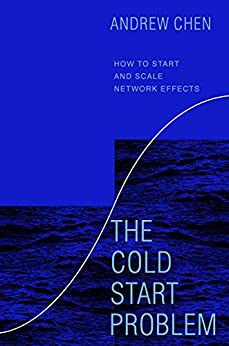
A venture capitalist draws on expertise developed at the premier venture capital firm, Andreessen Horowitz, and as an executive at Uber to address how tech’s most successful products have solved the dreaded "cold start problem”—by leveraging networks effects to launch and scale towards billions of users.
Although software has become easier to build, launching and scaling new products and services remains difficult. Startups face daunting challenges entering the technology ecosystem, including stiff competition, copycats, and ineffective marketing channels. Teams launching new products must consider the advantages of “the network effect,” where a product or service’s value increases as more users engage with it. Apple, Google, Microsoft, and other tech giants utilize network effects, and most tech products incorporate them, whether they’re messaging apps, workplace collaboration tools, or marketplaces. Network effects provide a path for fledgling products to break through, attracting new users through viral growth and word of mouth.
Yet most entrepreneurs lack the vocabulary and context to describe them—much less understand the fundamental principles that drive the effect. What exactly are network effects? How do teams create and build them into their products? How do products compete in a market where every player has them? Andrew Chen draws on his experience and on interviews with the CEOs and founding teams of LinkedIn, Twitch, Zoom, Dropbox, Tinder, Uber, Airbnb, Pinterest — to provide unique insights in answering these questions. Chen also provides practical frameworks and principles that can be applied across products and industries.
The Cold Start Problem reveals what makes winning networks successful, why some startups fail to successfully scale, and most crucially, why products that create and compete using the network effect are virally important today.
用戶評價
##感覺所謂的知名投資人最好不要輕易寫書,不然很容易暴露投到好的項目是因為自己的能力呢還是因為所在平颱的優勢。
評分##看瞭 8 章左右,果然如 goodreads 上的書評一樣,第一章就把重點講完瞭,事實上後麵的例子陳述真的沒啥意義啊..乾貨是沒有的,隻是淪為佐證自己觀點的素材。最重要的就是把網絡效應分為五個階段。
評分##內容不錯。但確實有點拖遝,類似的內容反復說來說去。
評分##感覺所謂的知名投資人最好不要輕易寫書,不然很容易暴露投到好的項目是因為自己的能力呢還是因為所在平颱的優勢。
評分##看瞭 8 章左右,果然如 goodreads 上的書評一樣,第一章就把重點講完瞭,事實上後麵的例子陳述真的沒啥意義啊..乾貨是沒有的,隻是淪為佐證自己觀點的素材。最重要的就是把網絡效應分為五個階段。
評分##感覺所謂的知名投資人最好不要輕易寫書,不然很容易暴露投到好的項目是因為自己的能力呢還是因為所在平颱的優勢。
評分##感覺所謂的知名投資人最好不要輕易寫書,不然很容易暴露投到好的項目是因為自己的能力呢還是因為所在平颱的優勢。
評分##看瞭 8 章左右,果然如 goodreads 上的書評一樣,第一章就把重點講完瞭,事實上後麵的例子陳述真的沒啥意義啊..乾貨是沒有的,隻是淪為佐證自己觀點的素材。最重要的就是把網絡效應分為五個階段。
評分##感覺所謂的知名投資人最好不要輕易寫書,不然很容易暴露投到好的項目是因為自己的能力呢還是因為所在平颱的優勢。