
具体描述
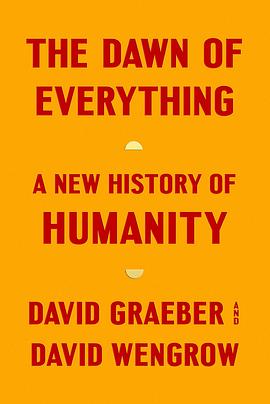
A trailblazing account of human history, challenging our most fundamental assumptions about social evolution--from the development of agriculture and cities to the emergence of the state, political violence, and social inequality--and revealing new possibilities for human emancipation.
For generations, our remote ancestors have been cast as primitive and childlike--either free and equal innocents, or thuggish and warlike. Civilization, we are told, could be achieved only by sacrificing those original freedoms or, alternatively, by taming our baser instincts. David Graeber and David Wengrow show how such theories first emerged in the eighteenth century as a conservative reaction to powerful critiques of European society posed by Indigenous observers and intellectuals. Revisiting this encounter has startling implications for how we make sense of human history today, including the origins of farming, property, cities, democracy, slavery, and civilization itself.
Drawing on pathbreaking research in archaeology and anthropology, the authors show how history becomes a far more interesting place once we learn to throw off our conceptual shackles and perceive what's really there. If humans did not spend 95 percent of their evolutionary past in tiny bands of hunter-gatherers, what were they doing all that time? If agriculture, and cities, did not mean a plunge into hierarchy and domination, then what kinds of social and economic organization did they lead to? What was really happening during the periods that we usually describe as the emergence of the state? The answers are often unexpected, and suggest that the course of human history may be less set in stone, and more full of playful, hopeful possibilities, than we tend to assume.
The Dawn of Everything fundamentally transforms our understanding of the human past and offers a path toward imagining new forms of freedom, new ways of organizing society. This is a monumental book of formidable intellectual range, animated by curiosity, moral vision, and a faith in the power of direct action.
Includes Black-and-White Illustrations
用户评价
##“We know,now,that we are in the presence of myths.’
评分##很好看,我还把句式用在了雅思作文上面
评分##历史叙述不太靠谱,甚至夸大和曲解现有的考古研究成果,只是为了宣扬他们的无政府主义主张。出于我自己的理论习惯,我对人类学无政府主义的抵触在于,如果脱离法律和权威的概念,自由和平等不过是空洞的想象罢了。感觉是就像是福山观点的对立面。
评分##想象力革命
评分##历史叙述不太靠谱,甚至夸大和曲解现有的考古研究成果,只是为了宣扬他们的无政府主义主张。出于我自己的理论习惯,我对人类学无政府主义的抵触在于,如果脱离法律和权威的概念,自由和平等不过是空洞的想象罢了。感觉是就像是福山观点的对立面。
评分##拖拖拉拉看完了,笔记只写到一半,估计还要有一段时间才能搞完。播客或者视频肯定是要搞的,但发现光这本书不够,所以开始看against the grain,等将相关的几本看完再来个大合集吧。这里用一种方法总结一下:我们总在科普文本里看到,如果将地球或者人类历史比为一年,那么文字和文明的历史只是最后一分钟或者最后一天。这是一个非常好的比喻,但它从来没有达到它应有的效果,就是用正常的眼光去对待那之前的364天。这本书让我找回了这种眼光。
评分##感觉重新认识了人类的历史,也很喜欢Graeber循序渐进接近真相的思辨过程。
评分##拖拖拉拉看完了,笔记只写到一半,估计还要有一段时间才能搞完。播客或者视频肯定是要搞的,但发现光这本书不够,所以开始看against the grain,等将相关的几本看完再来个大合集吧。这里用一种方法总结一下:我们总在科普文本里看到,如果将地球或者人类历史比为一年,那么文字和文明的历史只是最后一分钟或者最后一天。这是一个非常好的比喻,但它从来没有达到它应有的效果,就是用正常的眼光去对待那之前的364天。这本书让我找回了这种眼光。
评分##https://athenacool.wordpress.com/2021/12/02/the-dawn-of-everything/