
具体描述
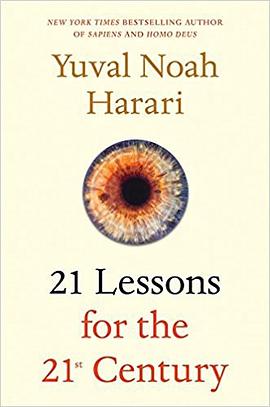
In Sapiens, he explored our past. In Homo Deus, he looked to our future. Now, one of the most innovative thinkers on the planet turns to the present to make sense of today's most pressing issues.
How do computers and robots change the meaning of being human? How do we deal with the epidemic of fake news? Are nations and religions still relevant? What should we teach our children?
Yuval Noah Harari's 21 Lessons for the 21st Century is a probing and visionary investigation into today's most urgent issues as we move into the uncharted territory of the future. As technology advances faster than our understanding of it, hacking becomes a tactic of war, and the world feels more polarized than ever, Harari addresses the challenge of navigating life in the face of constant and disorienting change and raises the important questions we need to ask ourselves in order to survive.
In twenty-one accessible chapters that are both provocative and profound, Harari builds on the ideas explored in his previous books, untangling political, technological, social, and existential issues and offering advice on how to prepare for a very different future from the world we now live in: How can we retain freedom of choice when Big Data is watching us? What will the future workforce look like, and how should we ready ourselves for it? How should we deal with the threat of terrorism? Why is liberal democracy in crisis?
Harari's unique ability to make sense of where we have come from and where we are going has captured the imaginations of millions of readers. Here he invites us to consider values, meaning, and personal engagement in a world full of noise and uncertainty. When we are deluged with irrelevant information, clarity is power. Presenting complex contemporary challenges clearly and accessibly, 21 Lessons for the 21st Century is essential reading.
用户评价
##比前两部作品随意了不少,大概因为话题很散没有什么结构可言。目测大型吐槽现场...
评分##All too familiar. All too agreeable. 所以赶忙找一本Intellectuals and society出来给自己敲敲钟。
评分##2019年Mark的第一本书。讲历史,政治,宗教,意识形态,AI。但是我比较感兴趣的还是education那一章,觉得很related。算了,以后还是不要看bill gates这种大神推荐的书了。没达到那个境界呢,还是看跟自己更相关的书比较有用。
评分##比前两部作品随意了不少,大概因为话题很散没有什么结构可言。目测大型吐槽现场...
评分##“It’s much harder to struggle against irrelevance than against exploitation”
评分##2019年Mark的第一本书。讲历史,政治,宗教,意识形态,AI。但是我比较感兴趣的还是education那一章,觉得很related。算了,以后还是不要看bill gates这种大神推荐的书了。没达到那个境界呢,还是看跟自己更相关的书比较有用。
评分##Harari,真的不能再这样下去啦,得有新货啊~
评分##从Sapiens到21 Lessons,从人的局限到人造物和对物控制的极限,愿景就是个画的饼,饼在接下来的纪年是吃不到了,但思考的能力才是一直推着这个纰漏百出的世界进化下去的动力。
评分##1.这名字太坑爹了,让人想起火车站小书摊一排又一排的成功学。。。2.找回了看人类简史的感觉,就是“空空的。。”(空空的就是我给人类简史的短评),就是又把一切打了个稀巴烂。3.有些对未来教育的段落有启发意义,小本本已抄下。4.这本书我看的很慢,somehow就把每一个意义and/or读音不是很有把握的词全都查了kindle字典,我觉得很多很实用的non fiction vocabulary. 5.到最后,哎哟喂,全书就是内观的软文呢哈哈哈。。。。总体还是享受了读这本书的经验。