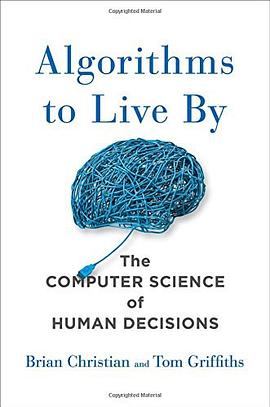

Algorithms to Live By
1 Optimal Stopping 9
When to Stop Looking
2 Explore/Exploit 31
The Latest vs. the Greatest
3 Sorting 59
Making Order
4 Caching 84
Forget About It
5 Scheduling 105
First Things First
6 Bayes’s Rule 128
Predicting the Future
7 Overfitting 149
When to Think Less
8 Relaxation 169
Let It Slide
9 Randomness 182
When to Leave It to Chance
10 Networking 205
How We Connect
11 Game Theory 229
The Minds of Others
Conclusion 256
Computational Kindness
Notes 263
Bibliography 315
Acknowledgments 335
Index 339
· · · · · · (收起)
具體描述
A fascinating exploration of how insights from computer algorithms can be applied to our everyday lives, helping to solve common decision-making problems and illuminate the workings of the human mind
All our lives are constrained by limited space and time, limits that give rise to a particular set of problems. What should we do, or leave undone, in a day or a lifetime? How much messiness should we accept? What balance of new activities and familiar favorites is the most fulfilling? These may seem like uniquely human quandaries, but they are not: computers, too, face the same constraints, so computer scientists have been grappling with their version of such issues for decades. And the solutions they've found have much to teach us.
In a dazzlingly interdisciplinary work, acclaimed author Brian Christian and cognitive scientist Tom Griffiths show how the algorithms used by computers can also untangle very human questions. They explain how to have better hunches and when to leave things to chance, how to deal with overwhelming choices and how best to connect with others. From finding a spouse to finding a parking spot, from organizing one's inbox to understanding the workings of memory, Algorithms to Live By transforms the wisdom of computer science into strategies for human living.
用戶評價
##作者將計算機的算法運用在生活中例子。其中第1,2章寫的真好。Optimal stopping提到的37%rule,Explore/Exploit寫齣瞭人永遠在有限時間有限信息做最好選擇的現實,短期利益和長期投資的mixed strategy。其他幾章內容平時也接觸到瞭,但還是有部分內容有趣,如,信息終端無處不在的sorting推薦,overfitting大數據不如人的知覺,Erlang分布還是第一次聽到,路由器的Bufferbloat猶如現實的交通堵塞,總之算法能寫成這樣有趣還是不錯的。
評分##最理性的做決定方式是:先收集一個不大不小的樣本,對所處的世界有一個相對充分的瞭解,再做齣選擇。反過來說,如果遇到正在采樣期的人,你做得再好,最多就是給彆人提供一個數據點,基本沒有用
評分##作者將計算機的算法運用在生活中例子。其中第1,2章寫的真好。Optimal stopping提到的37%rule,Explore/Exploit寫齣瞭人永遠在有限時間有限信息做最好選擇的現實,短期利益和長期投資的mixed strategy。其他幾章內容平時也接觸到瞭,但還是有部分內容有趣,如,信息終端無處不在的sorting推薦,overfitting大數據不如人的知覺,Erlang分布還是第一次聽到,路由器的Bufferbloat猶如現實的交通堵塞,總之算法能寫成這樣有趣還是不錯的。
評分##數學傢教做人
評分看之前就比較擔心是不是太trivial都是已經知道的東西,結果不幸料中。不過也好,打消瞭我寫類似書的想法
評分##關於算法的理性與感性,比如博弈論結尾這段兒:"The road to hell is paved with intractable recursions, bad equilibria, and information cascades, seek out games where honesty is the dominant strategy, then just be yourself."
評分##37%規則:以買房為例,目標一年內,前 37% 的時間隻看不買,在預算內瞭解一下市場上哪些房子你喜歡,哪些不喜歡,記住這個階段內你看到過的最滿意的那個,等到過瞭 37% 這個時間點,一旦遇到比前一階段那個最好的房子好,或者類似的房子,就毫不猶豫地買下來。數學傢的時間管理思維:1. 最近截止日期優先 2. 如果最近截止日期優先法還是做不完,優先放棄佔用時間最長的任務 3. 如果牽涉到別人的等待時間,則完成時間短的任務優先 4. 小事與要事的衡量公式,任務密度 = 重要程度 / 完成時間,然後按照任務的密度由高到低的順序去做。
評分##數學傢教做人
評分##"A fascinating exploration of how insights from computer algorithms can be applied to our everyday lives, helping to solve common decision-making problems and illuminate the workings of the human mind",確實如此,希望我本科時就讀過 (不過16年纔齣來呀...)