
具体描述
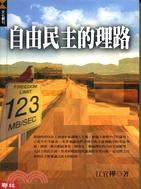
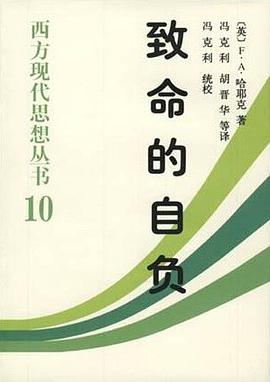
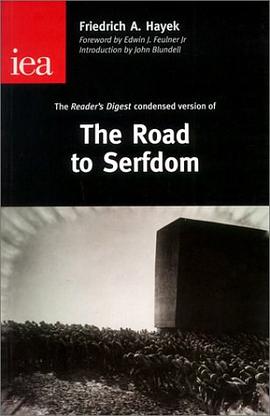
In the last years of World War II, Friedrich Hayek wrote The Road to Serfdom. He warned the allies that policy proposals which were being canvassed for the post-war world ran the risk of destroying the very freedom for which they were fighting. On the basis of 'as in war, so in peace', economists and others were arguing that the government should plan all economic activity. Such planning, Hayek argued, would be incompatible with liberty, and had been at the very heart of the movements that had established both communism and Nazism.
On its publication in 1944, the book caused a sensation. Neither its British nor its American publisher could keep up with demand, owing to wartime paper rationing. Then, in 1945, Reader's Digest published The Road to Serfdom as the condensed book in its April edition. For the first and still the only time, the condensed book was placed at the front of the magazine instead of the back. Hayek found himself a celebrity, addressing a mass market.
The condensed edition was republished for the first time by the IEA in 1999 and has been reissued to meet the continuing demand for its enduringly relevant and accessible message.
用户评价
##Rule of Law vs. Rule of Status; Formal Law vs. Substantive Rules...
评分##平生第一次见到这么多定语从句……
评分##后半部分比前半部分精彩。过了半个多世纪之后再回头来考察,他对于平等安保人权自由民主乃至国际秩序等许多领域的预言和直觉都丝毫不过时,要知道,构建合理的新秩序永远比证明秩序的合理性要复杂。
评分##平生第一次见到这么多定语从句……
评分##果然condensed...后面的cartoon很有意思
评分##我看的是全本 不过暂且标记之
评分##邂逅:AIPE2011指定阅读; 旅程:2011.7.; 地点:HKU; 所谓常识,就是用简单的语言表述出来的无可辩驳的东西。中国用了三十年一一“实践”着Hayek所言通往奴役的各个阶段;三十年后,有些东西仍在继续……
评分##The first book that Casey recommended to me - very political and philosophical, but nonetheless interesting arguments.
评分##very penetrating... much easier to read than the original version...