
具体描述
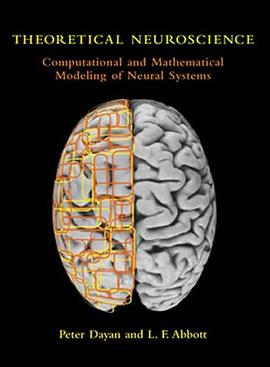
Theoretical neuroscience provides a quantitative basis for describing what nervous systems do, determining how they function, and uncovering the general principles by which they operate. This text introduces the basic mathematical and computational methods of theoretical neuroscience and presents applications in a variety of areas including vision, sensory-motor integration, development, learning, and memory.The book is divided into three parts. Part I discusses the relationship between sensory stimuli and neural responses, focusing on the representation of information by the spiking activity of neurons. Part II discusses the modeling of neurons and neural circuits on the basis of cellular and synaptic biophysics. Part III analyzes the role of plasticity in development and learning. An appendix covers the mathematical methods used, and exercises are available on the book's Web site.
用户评价
##Zhaoping Li的教材
评分##Zhaoping Li的教材
评分##大眼老师的经典著作
评分##好书,当年读的我抱头痛哭。还是Zhaoping的 Understanding Vision更让人轻松一些。
评分##Zhaoping Li的教材
评分##教材
评分##好书,当年读的我抱头痛哭。还是Zhaoping的 Understanding Vision更让人轻松一些。
评分##gross read, to be refined, with https://www.coursera.org/course/compneuro # let applied mathematics, statistical physics, and other theory-intensed branches in computational science to amend those pragmatic slips of CS
评分##速览了前两部分