
具体描述
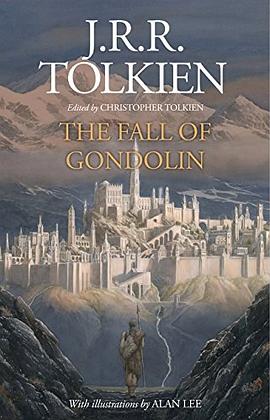
In the Tale of The Fall of Gondolin are two of the greatest powers in the world. There is Morgoth of the uttermost evil, unseen in this story but ruling over a vast military power from his fortress of Angband. Deeply opposed to Morgoth is Ulmo, second in might only to Manwë, chief of the Valar.
Central to this enmity of the gods is the city of Gondolin, beautiful but undiscoverable. It was built and peopled by Noldorin Elves who, when they dwelt in Valinor, the land of the gods, rebelled against their rule and fled to Middle-earth. Turgon King of Gondolin is hated and feared above all his enemies by Morgoth, who seeks in vain to discover the marvellously hidden city, while the gods in Valinor in heated debate largely refuse to intervene in support of Ulmo's desires and designs.
Into this world comes Tuor, cousin of Túrin, the instrument of Ulmo's designs. Guided unseen by him Tuor sets out from the land of his birth on the fearful journey to Gondolin, and in one of the most arresting moments in the history of Middle-earth the sea-god himself appears to him, rising out of the ocean in the midst of a storm. In Gondolin he becomes great; he is wedded to Idril, Turgon's daughter, and their son is Eärendel, whose birth and profound importance in days to come is foreseen by Ulmo.
At last comes the terrible ending. Morgoth learns through an act of supreme treachery all that he needs to mount a devastating attack on the city, with Balrogs and dragons and numberless Orcs. After a minutely observed account of the fall of Gondolin, the tale ends with the escape of Túrin and Idril, with the child Eärendel, looking back from a cleft in the mountains as they flee southward, at the blazing wreckage of their city. They were journeying into a new story, the Tale of Eärendel, which Tolkien never wrote, but which is sketched out in this book from other sources.
Following his presentation of Beren and Lúthien Christopher Tolkien has used the same 'history in sequence' mode in the writing of this edition of The Fall of Gondolin. In the words of J.R.R. Tolkien, it was ‘the first real story of this imaginary world’ and, together with Beren and Lúthien and The Children of Húrin, he regarded it as one of the three 'Great Tales' of the Elder Days.
用户评价
##读到35%贡多林已经陷落完了
评分##中英文版都看过,托尔金的英文文笔很好,无论翻译再怎么努力(中译已经很好了),味道还是会有些丢失,这也是在所难免的事情。对于我个人的口味来说,略显短小了
评分##小托发刀的实力也不弱啊...不过贡多林本身因为叙事角度和复杂程度的问题,就相对来说比较难有一个完整的全貌,能填到这么一个程度窝是满意的。
评分##读到35%贡多林已经陷落完了
评分##full text也不过110页,这个故事没写完真的太可惜了,还好有小托爷爷兢兢业业给父亲填坑。但还是好想看托老扩充成完整的故事,Tuor和Idril的日常,Turgon和Maeglin,还有最后的Earendil的远航。永远航行的船只,天边的大希望之星,Earendil那充满希望又无比悲剧的一生。第一纪元那么多人那么多精,竟然找不出几个善终善了的,托老发的一手好刀。又想起PJ的the hobbit里Thorin找到的刀貌似是Ecthelion的佩刀,刀依然在,而持刀的人早已魂归曼都斯,悲哉贡多林😭
评分##假装读过。。。。英文。。。。哈哈哈
评分##翻译中…
评分##任何评价都是多余的,太壮烈啦😭
评分##三大传说的结局:小强生生把纳国折腾全灭,让多瑞亚斯和刚多林结成了CP