
具体描述
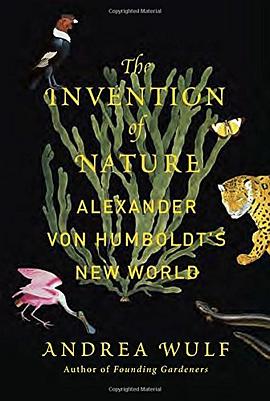
The acclaimed author of Founding Gardeners reveals the forgotten life of Alexander von Humboldt, the visionary German naturalist whose ideas changed the way we see the natural world—and in the process created modern environmentalism.
Alexander von Humboldt (1769–1859) was an intrepid explorer and the most famous scientist of his age. In North America, his name still graces four counties, thirteen towns, a river, parks, bays, lakes, and mountains. His restless life was packed with adventure and discovery, whether he was climbing the highest volcanoes in the world or racing through anthrax-infected Siberia or translating his research into bestselling publications that changed science and thinking. Among Humboldt’s most revolutionary ideas was a radical vision of nature, that it is a complex and interconnected global force that does not exist for the use of humankind alone.
Now Andrea Wulf brings the man and his achievements back into focus: his daring expeditions and investigation of wild environments around the world and his discoveries of similarities between climate and vegetation zones on different continents. She also discusses his prediction of human-induced climate change, his remarkable ability to fashion poetic narrative out of scientific observation, and his relationships with iconic figures such as Simón Bolívar and Thomas Jefferson. Wulf examines how Humboldt’s writings inspired other naturalists and poets such as Darwin, Wordsworth, and Goethe, and she makes the compelling case that it was Humboldt’s influence that led John Muir to his ideas of natural preservation and that shaped Thoreau’s Walden.
With this brilliantly researched and compellingly written book, Andrea Wulf shows the myriad fundamental ways in which Humboldt created our understanding of the natural world, and she champions a renewed interest in this vital and lost player in environmental history and science.
用户评价
##主题一以贯之的洪堡传记,可看作通往洪堡著作的引子
评分##这阵子读得最开心的一本书,展示了一个胸怀天地大爱的人,是如何贯彻信念,克服各种困难,并终其一生燃烧热情的。根据洪堡压抑的家庭氛围和求学经历、对艺术与美的敏感、迷茫期的郁郁寡欢、以及开创事业时惊人的充沛精力,不负责任地猜测他有可能曾是bipolar II 。本书作者文笔很好。
评分##主题一以贯之的洪堡传记,可看作通往洪堡著作的引子
评分##想要重读丈量世界的时候,搜出来了这本书,非常通史了。
评分##百科全书式学者的消失并不是偶然的,自然科学的演化已经超越了观察和经验所及,所以洪堡本人也算是最后之人吧。作者花了很多笔墨描写洪堡的社交圈和影响力,大概也是想强调洪堡的个例性,最后200页的索引真心佩服。下一步要把Cosmos找出来读读。
评分##这阵子读得最开心的一本书,展示了一个胸怀天地大爱的人,是如何贯彻信念,克服各种困难,并终其一生燃烧热情的。根据洪堡压抑的家庭氛围和求学经历、对艺术与美的敏感、迷茫期的郁郁寡欢、以及开创事业时惊人的充沛精力,不负责任地猜测他有可能曾是bipolar II 。本书作者文笔很好。
评分##509.2 HUM
评分##关于这群人这段历史已经太熟悉,所以阅读体验相对平淡。还是觉得《丈量世界》中,把洪堡和高斯的人生故事交织呼应起来的写法更加别出心裁一些。这本也算是格局开阔,细节丰富,但是关于洪堡“发现”的“自然”,总体还是抒情大于阐述。欲知详情如何,要把Personal Narrative找来看看才行。嗯。
评分洪堡是西方近现代最后一位通才,兴趣广泛笔耕不辍,他的热血都献给了冒险和研究。作者聪明之处在于行文贯彻了主人公所信奉的整体论和万物互联的观点,所以这本书不仅仅回顾了这位德国博学家的传奇一生(在正文三分之二的地方洪堡就死了),还穿插着他对前辈(歌德)、同辈人(例如玻利瓦尔)和后来者(例如达尔文、梭罗、约翰·缪尔)的深远影响。作者对于洪堡的性取向处理相对模糊,但从给出的信息来分析,应该是柏拉图式的同性恋者或是精神偏好男性的无性恋者。