具体描述
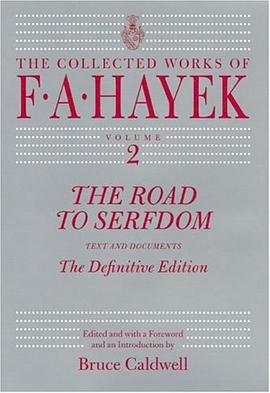
An unimpeachable classic work in political philosophy, intellectual and cultural history, and economics, The Road to Serfdom has inspired and infuriated politicians, scholars, and general readers for half a century. Originally published in 1944—when Eleanor Roosevelt supported the efforts of Stalin, and Albert Einstein subscribed lock, stock, and barrel to the socialist program— The Road to Serfdom was seen as heretical for its passionate warning against the dangers of state control over the means of production. For F. A. Hayek, the collectivist idea of empowering government with increasing economic control would lead not to a utopia but to the horrors of Nazi Germany and Fascist Italy.
First published by the University of Chicago Press on September 18, 1944, The Road to Serfdom garnered immediate, widespread attention. The first printing of 2,000 copies was exhausted instantly, and within six months more than 30,000 books were sold. In April 1945, Reader’s Digest published a condensed version of the book, and soon thereafter the Book-of-the-Month Club distributed thisedition to more than 600,000 readers. A perennial best seller, the book has sold 400,000 copies in the United States alone and has been translated into more than twenty languages, along the way becoming one of the most important and influential books of the century.
With this new edition, The Road to Serfdom takes its place in the series TheCollected Works of F. A. Hayek. The volume includes a foreword byseries editor and leading Hayek scholar Bruce Caldwell explaining the book's origins and publishinghistory and assessing common misinterpretations ofHayek's thought. Caldwell has also standardized and correctedHayek's references and added helpful new explanatory notes. Supplemented with an appendix of related materials ranging from prepublication reports on the initial manuscriptto forewords to earlier editions by John Chamberlain, Milton Friedman, and Hayek himself, this new edition of The Road to Serfdom will be the definitive version of Friedrich Hayek's enduring masterwork.
用户评价
##伟人几皆坏人 世人提及反腐和擅权,常会引用阿克顿勋爵(Lord Acton)的名言:“权力导致腐败,绝对权力导致绝对腐败。”这句话的原文是:Power tends to corrupt, and absolute power corrupts absolutely. tend意为:be inclined to move; have a direction,即“倾向”;“有某种趋势”;“趋于”。殷海光先生译为:“权力趋于腐坏”,似更近原意。 阿克顿勋爵自认为一生碌碌,但这句名言却使他名垂青史。这句话源自1887年4月,阿克顿致柯莱敦主教(Mandell Creighton)函,力陈教皇“永无谬误”的祸祟。
评分##我们终将被我们的理想所奴役。
评分##终于斗胆拜读了这部名著,原文虽不长但车轱辘话可不少,定语从句长到我都忘了他前面讲了啥,作为睡前读物倒是顶好的(?) 我也纳闷过它竟然不是禁书,但一想还有人1984读后感都是感恩能生活在某国也就瞬间释然了,总之就算Hayek的某些观点早已过时,但他的预言家属性却依然叫人冷汗直流。 真理原来是道德的一部分,这么说来我的道德标准极高,不过也仅在对真相无比执着这一点上。Totalitarianism下只能存在一个绝对真理,而这个真理也只能为巩固至高无上的权力而存在。任何人,任何事,哪怕是科学研究,也必须为“维稳”让位,这也就与真正的科学精神完全背道而驰了 Truth is to be sought, not given 而在这种制度下的反智无逻辑也是我无论如何也无法接受的。
评分##当年逐字逐句翻译的😭😭
评分##masterpiece
评分##当年逐字逐句翻译的😭😭
评分##当年逐字逐句翻译的😭😭
评分##masterpiece
评分##masterpiece