
具体描述
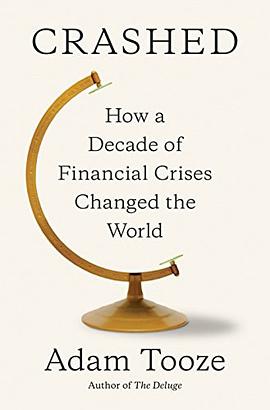
From a prizewinning economic historian, an eye-opening reinterpretation of the 2008 economic crisis (and its ten-year aftermath) as a global event that directly led to the shockwaves being felt around the world today.
In September 2008 President George Bush could still describe the financial crisis as an incident local to Wall Street. In fact it was a dramatic caesura of global significance that spiraled around the world, from the financial markets of the UK and Europe to the factories and dockyards of Asia, the Middle East, and Latin America, forcing a rearrangement of global governance. In the United States and Europe, it caused a fundamental reconsideration of capitalist democracy, eventually leading to the war in the Ukraine, the chaos of Greece, Brexit, and Trump.
It was the greatest crisis to have struck Western societies since the end of the Cold War, but was it inevitable? And is it over? Crashed is a dramatic new narrative resting on original themes: the haphazard nature of economic development and the erratic path of debt around the world; the unseen way individual countries and regions are linked together in deeply unequal relationships through financial interdependence, investment, politics, and force; the ways the financial crisis interacted with the spectacular rise of social media, the crisis of middle-class America, the rise of China, and global struggles over fossil fuels.
Finally, Tooze asks, given this history, what now are the prospects for a liberal, stable, and coherent world order?
用户评价
##one of the best researched and written books I've ever came across. Linking all major events mapping a global view with meaningful details. How did we end up here, how is one thing connected to another, what does everything mean, and where are we going? big questions well addressed with solid data and sound arguments
评分##可以说是史诗 - for anyone who hopes to understand how we got here since 2008.
评分##Jus amazed by the line and time stamp, basically documented every major point during 20 years, the imbalance between us and Europe, within Europe , even Eurasian, my memory is kinda faded , and when I saw the events I can vividly picture the emotion when I was at the moments
评分##看起来有点吃力,细节有点多。全面回顾2008年到18年十年的经济政治变局。美国受次级债的影响,第一波全球危机,美联储及财政部联手提供流动性,暂时稳定经济。在此阶段危机中华尔街,美国金融机构受创严重,但欧洲金融金融机构受创也很严重,主要是大规模借美元贷美元,承受比美国金融机构更大的压力。随着美国经济的萎缩,带来欧洲各国经济的萎缩,特别是东欧各国,欧洲银行深度介入东欧各国,经济的崩溃,带来欧洲金融机构的二次大危机。快十年的财政收缩及经济低迷带来了保护主义,经济危机后十年美国更不均衡的财富分配,受损的白人蓝领推选了特朗普,世界进入一个大变局时代,柏林墙后将近二三十年的和平与全球化红利将可能消失。
评分##Read Intro, and chapters 1, 6, 7, 10. Not a big fan of 2008 financial crisis though. Chris
评分##4.5.对事件的梳理可以更精炼,对政治经济的分析与批判可以更深入,但作为一部总结性的后金融危机全球史其整理与启发作用是巨大的。
评分##多数事件的历史意义,在发生当下可能并不清晰。等经过二十五十年之后,水落石出,才能看清它是否形成历史的转折。但2008年的全球金融危机,并不在此列。危机爆发之时,已经形成金融海啸,震动全球;而它的真实影响,直到今天还绵延不绝,并且仍将继续影响我们的生活。危机已经过去十四年,但历史的转折已经隐隐显现。这一次危机,就像1944年布雷顿森林体系的建立,或者1973年布雷顿森林体系的解体一样,将对未来数十年的全球金融、经济、社会体系产生影响。 这本书打四星,也许再过十年,回头看是否可以打五星。
评分##讲中国那一章,因为我自己这大半年来开始接触债券一级市场的缘故,听得毛骨悚然又醍醐灌顶。现在是没赚到钱,倘若以后赚到了钱,也高兴不起来。中国的钱花在十八线县城的双向八车道大马路上,实体经济却一点点在凋敝。时间进入到三月末,全球大放水,3年后A股爆雷潮预定
评分##可以说是史诗 - for anyone who hopes to understand how we got here since 2008.