
具体描述
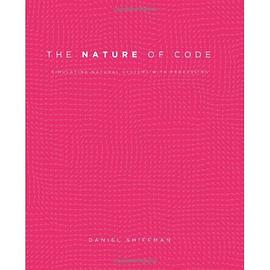
How can we capture the unpredictable evolutionary and emergent properties of nature in software? How can understanding the mathematical principles behind our physical world help us to create digital worlds? This book focuses on a range of programming strategies and techniques behind computer simulations of natural systems, from elementary concepts in mathematics and physics to more advanced algorithms that enable sophisticated visual results. Readers will progress from building a basic physics engine to creating intelligent moving objects and complex systems, setting the foundation for further experiments in generative design. Subjects covered include forces, trigonometry, fractals, cellular automata, self-organization, and genetic algorithms. The book's examples are written in Processing, an open-source language and development environment built on top of the Java programming language. On the book's website (http://www.natureofcode.com), the examples run in the browser via Processing's JavaScript mode.
用户评价
##Processing 看这个就够了,免费的。如果运动学都记得,直接看代码就行。 56789 章开始比较有意思。
评分##感觉自己写的代码脱胎换骨
评分##强大但还没吃透的一本书
评分看完一周目才觉得processing总算是入了门 世界观的维度也延展了
评分##Daniel Shiffman 是世界上最有意思最可爱的编程老师!
评分##强大但还没吃透的一本书
评分##够硬,youtube上作者的视频很棒,简单的个体行为构成复杂难以预测的群体,联想到 《失控》
评分##好多processing栗子啊!
评分##結合高中物理的編程教學